


Non-Linguistic Physical Representation
When used intentionally and consistently, nonlinguistic representations are powerful instructional tools that can have a positive effect on student achievement. They provide varied ways for students to process new information without solely relying on language. (McREL International, 2016)
McREL’s analysis of research for the second edition of Classroom Instruction that Works (CITW) provides these research-based classroom recommendations for use of nonlinguistic representations:
- Use graphic organizers. - Use physical models or manipulatives. - Generate mental pictures. - Use pictures, illustrations, and pictographs. - Engage in kinesthetic activities.
McREL's Number 1 tip:
Consistently use each type of nonlinguistic representation. It’s important that students learn several ways to represent information nonlinguistically. This means providing students at every grade level with multiple opportunities to use kinesthetic movement, draw pictures and pictographs, use their senses and emotions to form solid mental images, be fluid in the use of several graphic organizers, and create or use physical models to denote their learning. Consistent use is key; if you use these strategies only occasionally, it will limit students’ ability to grasp the possibilities associated with learning both linguistically and nonlinguistically, preventing them from developing automaticity in their use of all the representations.
Putting it in to Practice

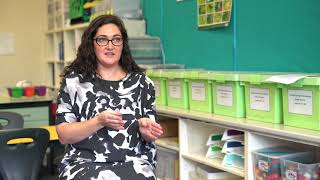
This photo is of my PST engaging students in a mini-lesson and using the non-linguistic representation approach.
In my classroom we used a non-linguistic representation to engage students and help them develop understanding of multiplication.
Today we linked the learning with a physical action today to help with understanding and adding to long term memory. This approach really worked and has been linked to having a strong effect size in helping students to develop a stronger understanding. This approach falls under the non-linguistic representation idea that McREL talks about in the Classroom Instruction That Works text.
Students were introduced to the multiplication symbol x. We talked about the meaning of the symbol and what it represents. Students linked the idea to arrays, repeated addition and groups. Students learned to do a physical criss-cross with their arms and saying 'groups of' for each cross move. They will get to continue practicing multiplication using this representation in maths warm up games throughout the week whilst playing the 'Roll an Array' game. In this game students will change their language of 'x rows of x' to 'x groups of x' and physically criss-crossing at the same time.
McRel International. 2016. Four tips for using nonlinguistic representations. [ONLINE] Available at: https://www.mcrel.org/four-tips-for-using-nonlinguistic-representations/. [Accessed 10 October 2018].
Comments